
9/8/2026
What Is Kohaze? The fruit of the “Natsuhaze,” beloved in Akita. We’ll also explain how it differs from blueberries.
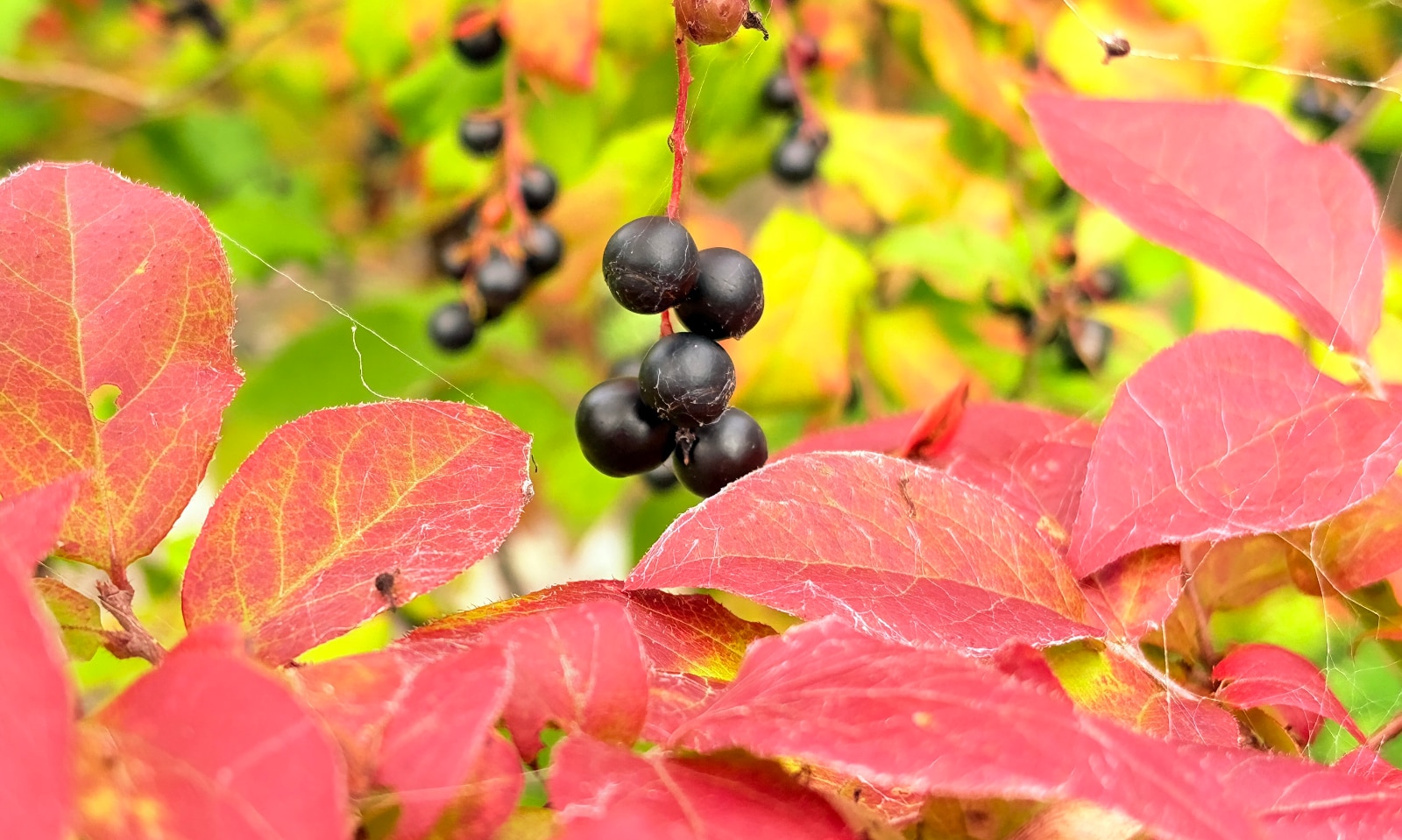
As autumn arrived, the Japanese spindle tree bore black berries.
Among the leaves that have begun to turn red, small black berries hang in clusters. Every year when I see this sight, I feel that autumn has arrived in Akita.
What is Kohaze?
“Kohaze” refers to a plant commonly known as “Natsuhaze,” but in Akita, it is affectionately called “kohaze.” It belongs to the same genus (Vaccinium) as blueberries within the heath family (Ericaceae) and bears small, dark purple berries in the fall.
Although they look very similar to blueberries, the berries are small and quite tart when eaten raw.
It is one of the familiar autumn fruits that has been enjoyed in Akita for generations.
What’s the difference between kohaze and blueberries?
If you’re seeing kohaze for the first time, you might think, “Is this a tiny blueberry?”
In fact, kohaze and blueberries are both members of the genus Sorbus in the heath family. However, when you actually taste them, there is a significant difference in flavor.
Kohaze (Natsuhaze) | Blueberry | |
|---|---|---|
Classification | Ericaceae family, genus *Snooki* | Ericaceae, genus Vaccinium |
Fruit Color | Dark purple | Blue-purple to black-purple |
Size | Small | Most are larger than kohaze |
Taste | Strongly tart | Sweet and tart, easy to eat raw |
How to Eat | Jams, sauces, processed foods, etc. | Eaten fresh, in jam, in desserts, etc. |
While blueberries are sweet and delicious when eaten fresh as they are, kohaze berries are so tart that eating them raw makes you exclaim, “That’s sour!”
This tartness is precisely what makes kohaze unique.
Can Kohaze Be Eaten Raw?
Kohaze berries can be eaten raw.
However, if you expect them to be as sweet as blueberries, you’ll likely find them quite tart.
Here at NORICHIE, we do eat the berries we harvest, but rather than eating large quantities raw, we use them in cooking and processing to make the most of their tartness.
How do you eat kohaze?
When you make jam from kohaze berries by adding sugar, the strong tartness is tempered just right, resulting in a sweet-and-sour flavor.
Here at NORICHIE, we also make jam from the kohaze we harvest.
Another favorite way we use them is in a sauce for roast beef.
The tartness and fruity flavor of kohaze pair perfectly with the umami of beef. By adding sweetness and other ingredients to make a sauce, the strong tartness you get when eating them raw becomes a flavor accent that enhances meat dishes.
The appeal of kohaze lies not just in the idea that “since it’s a fruit, it’s for dessert,” but in the fact that it can also be used in cooking.
A small autumn harvest I discovered in Akita
Although they aren’t as widely known nationwide as blueberries, they have long been cherished in Akita under the name “kohaze.”
NORICHIE’s kohaze berries also turn black, while the leaves gradually change to a vivid red.
The combination of black berries and autumn-colored leaves is truly beautiful; they not only offer the pleasure of eating but also add color to the autumn garden.
Harvesting what has grown in our garden and fields and using it in seasonal dishes—
This year, too, I look forward to enjoying this year’s kohaze on NORICHIE’s autumn table, whether as jam or in other dishes.