
8/19/2026
Off to the Nishimaonai Bon Odori again this year. A night that captures the feeling of the end of summer in Akita.
This year, I once again went to the “Nishimonoi Bon Odori” held in Ugo Town, Akita Prefecture.
Ever since I moved to Akita, I’ve been attending the Nishimaonai Bon Odori almost every year.
Counting this year, it’s my fifth time.
The sight of people dancing quietly by the bonfires when I first saw it left a deep impression on me, and ever since then, around this time of year, I naturally find myself thinking, “Should we go again this year?”
And as we’ve gone several times, the time we head out has gradually gotten later. This
year, we arrived at the venue a little past 9:00 p.m. The
Nishimonei Bon Odori starts at 7:30 p.m., and if you go early, you can watch the children dance.
Around 9:00 p.m., the number of adult dancers increases, and the atmosphere at the venue gradually changes.
Bonfires line Nishimaonai Honmachi Street.
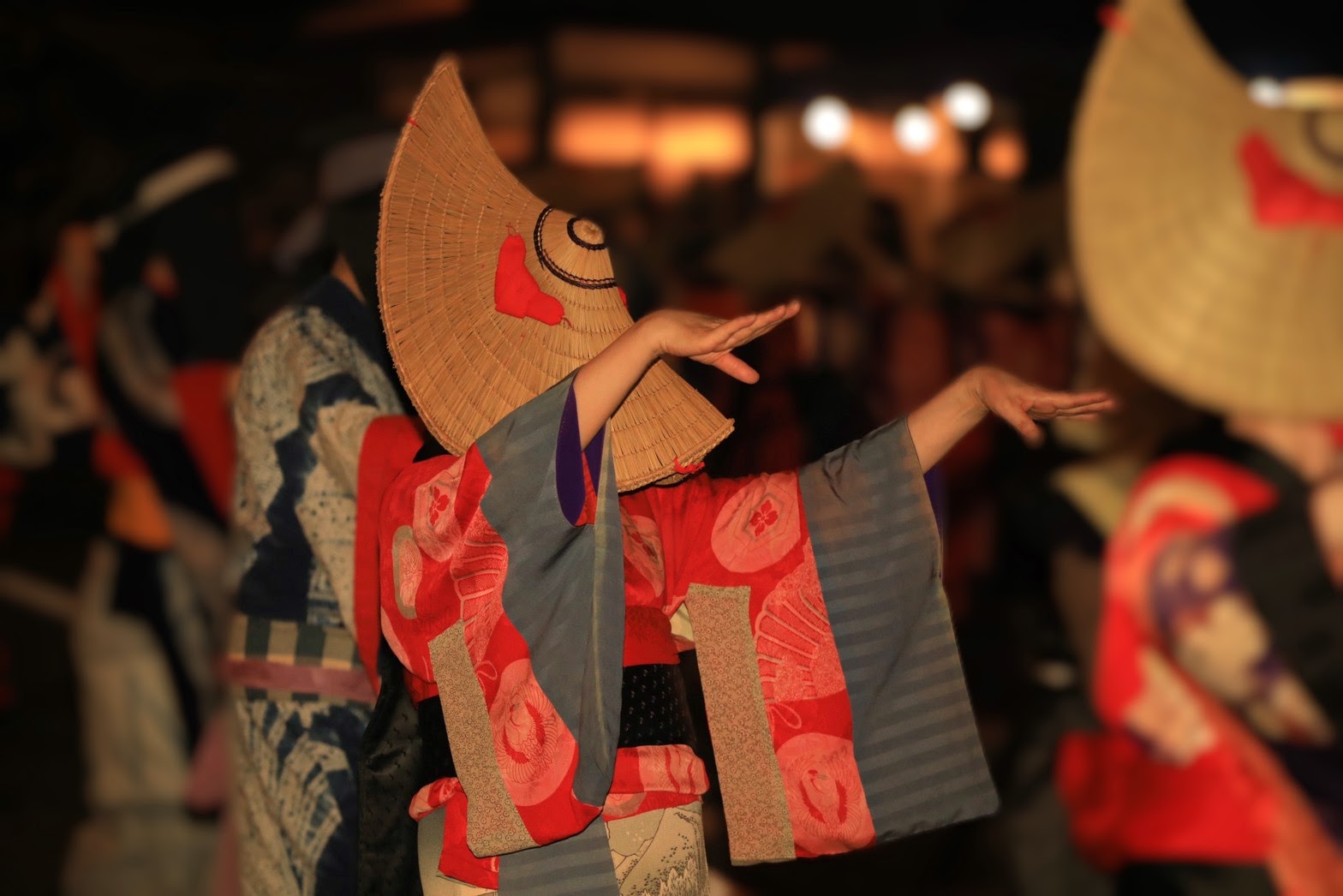
Illuminated by these flames, dancers—their faces hidden by Hikosazukin hoods or woven straw hats—form quiet lines and dance.The
colorful “hanui” costumes are another highlight of the Nishimaonai Bon Odori.
The movements of their fingertips, the gestures visible from beneath their woven hats, and the hems of their kimonos swaying with each step—though the movements aren’t
flashy, watching them is strangely captivating.It is said that the dancers, with their faces covered by
black Hikosazukin headscarves, represent the spirits of the dead. Dancing in the
darkness, illuminated only by the light of the bonfires, is a truly ethereal sight—even now, at my fifth time attending, I still find myself mesmerized.
And another thing I love is the “sound.”
The sounds of the shamisen, flute, and drums.
The accompaniment—somehow poignant and tinged with a touch of loneliness—echoes through the nighttime town.
On the other hand, the lyrics—known as “jiguchi”—coming from the stage tower are surprisingly humorous.
If these were broadcast on TV, they’d all likely violate compliance regulations—but as I listen to the
melancholic yet humorous tones and pay attention to the lyrics, I can’t help but laugh.
Perhaps that’s part of what makes the Nishimona Bon Odori so fascinating.
Then, at 10:30 p.m., it’s
finally time for this year’s Bon Odori to come to a close. As
the end draws near, the sounds of the taiko drums, shamisen, and flutes grow progressively more powerful, and a feverish excitement spreads throughout the venue.
Finally, there’s an encore. As if in response to the
loud applause and cheers, the sounds of the taiko drums, shamisen, and flutes resound once more. Both the
dancers and the audience seem to be enjoying these final moments together, creating a sense that the entire venue has become one.
And when it’s all over, the night returns to silence, as if the earlier bustle had never happened.
Every year, watching the Nishimaonai Bon Odori makes me feel the end of summer just a little bit.
Now that I’ve come to visit so many times, I’ve come to enjoy not just the dancing, but also the sounds of the festival music, the traditional chants, the scent of the bonfires, and even the night air.
Once the Nishimaonai Bon Odori ends, Akita gradually moves into autumn.