
8/28/2026
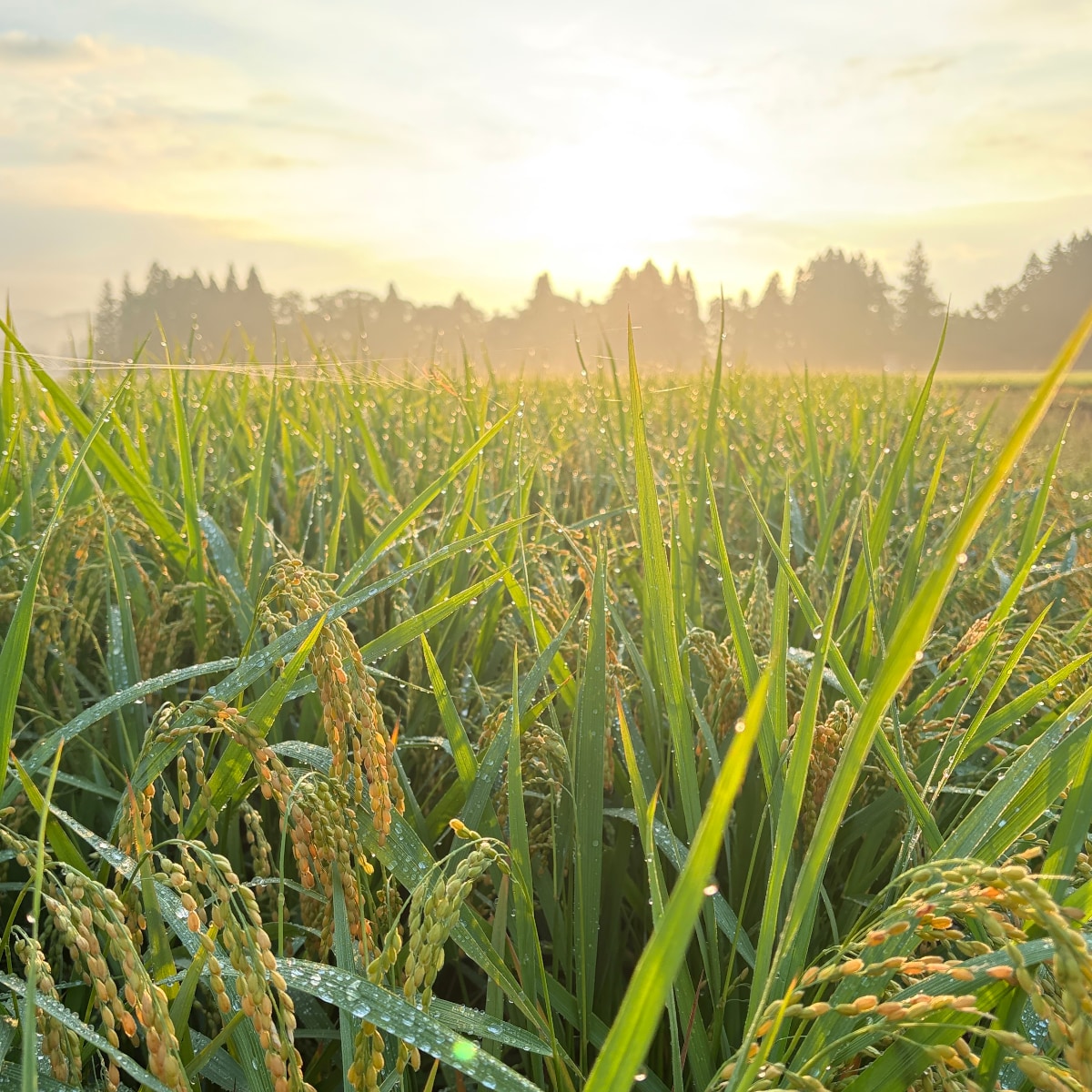
A spiderweb glistening in the morning dew. Signs of autumn in the rice paddies.
Last night, the temperature dropped suddenly, and it was even a little chilly in short sleeves. I slept in long sleeves
for the first time in a while.
Every year around this time, the air in the mornings and evenings starts to change little by little.
On clear, calm nights, “radiative cooling”—where heat from the ground escapes into the sky—occurs, and the rice fields are covered in morning dew just after dawn.
This morning, too, the rice leaves were covered with droplets of water, sparkling as they bathed in the morning sun.
And on a morning like this, there’s one more thing that stands out clearly.
It’s the spiderwebs stretched between the rice plants.
The fine threads, which usually go almost unnoticed, become clearly visible when covered in morning dew. When illuminated by the morning sun, the spiderwebs stand out all over the rice paddies, creating a truly magical scene.
It has long been said that “rice grown in fields with many spider webs tastes delicious.”
Of course, the presence of spiderwebs alone doesn’t make the rice taste better.
The spiders in the rice paddies eat the insects that damage the rice plants.
Pests can sometimes reduce the quality of the rice, but spiders are the rice paddies’ little helpers who catch those insects.
Furthermore, the presence of spiders and various other creatures is a sign that the paddy retains a rich ecosystem. Some studies have even shown that paddy fields cultivated with environmental considerations have higher numbers of spiders and other wildlife.
Perhaps that is why people have long said, “Rice grown in fields with spider webs tastes better.”
The rice ears are gradually turning golden and beginning to bow their heads.
Morning dew, spider webs, and rice ears that are just starting to change color—
watching the ever-changing scenery of the rice paddies every morning is one of the joys of living in this area.